Gate 30 – The Gate of Desire / Passion

Human Design Perspective

Gate 30 sits in the Solar Plexus centre, the centre of emotional awareness and wave-based experience. It pairs with Gate 41 in the Root to form the Channel of Recognition (41–30), an emotional channel that fuels desire, longing, and the hunger for meaningful experience.

Gate 30 carries the energy of intensity and emotional depth. It is the fire of desire that wants to feel life fully – to experience passion, longing, love, disappointment, hope, and everything in between. This gate does not promise outcomes; it brings the emotional charge that makes life vivid and memorable.

Gene Key Perspective

Gene Key 30 moves through the journey from Desire → Lightness → Rapture.

At the shadow frequency, Desire becomes attachment – clinging to specific outcomes and suffering when reality does not match expectation.

At the gift level, it transforms into Lightness – the ability to feel deeply without becoming attached to how things must unfold.

At the siddhi level, it becomes Rapture – a state of ecstatic surrender to the emotional intensity of life itself.

This Gene Key teaches that desire is not the problem – attachment is.

Success Codex Perspective

Genius: Passion
Archetype: The Enthusiast
Aligned cue: Passionate
Out of alignment cue: Denying

Key to success:
Following your passion and what lights you up.

Guiding question:
How can I bring my passion to this?

When aligned, Gate 30 expresses as enthusiasm, emotional aliveness, and devotion to what genuinely excites you.

When unaligned, it can show up as denying your desires, suppressing emotion, or cutting yourself off from what truly lights you up.

✨ The wisdom of Gate 30 lies in honouring desire without becoming consumed by it.

Reflections

  • Do I have this gate defined, in an open centre, or is it currently active through transit?
  • How does this energy interact with my Type and Authority?
  • Where am I feeling strong desire or emotional intensity?
  • Am I following my passion… or suppressing it?

Action Prompts

  • Identify one area where passion feels alive – and give it attention.
  • Notice where you may be denying or minimising your desires.
  • Practise feeling your emotions fully without attaching to outcome.
  • Ask yourself: How can I bring more enthusiasm to this situation?

Everyday Life Expression

You might notice this energy as:

  • Heightened emotional intensity.
  • Strong longing for certain experiences or people.
  • Excitement about new possibilities.
  • Frustration when expectations are not met.

Gate 30 amplifies emotional experience. When honoured, it fuels creativity, love, and aliveness. When suppressed, it can feel flat, disconnected, or restless.

Summary

Gate 30 is the fire of passion and desire. It fuels emotional experience and invites you to feel life fully. When aligned, it brings enthusiasm and depth. When unaligned, it can become attachment or denial. Its medicine is passionate engagement without clinging to outcome.
Gate 13 – The Gate of Listening

Human Design Perspective

Gate 13 sits in the G Centre (Identity Centre), the centre of love, direction, and purpose. It pairs with Gate 33 in the Throat to form the Channel of the Prodigal (13–33), a channel centred on memory, reflection, and storytelling.

Gate 13 carries the energy of listening, witnessing, and holding the stories of others. It is often called the “gate of the listener” because it naturally attracts confidences and experiences, becoming a keeper of collective memory and wisdom.

Gene Key Perspective

Gene Key 13 takes us on the journey from Discord → Discernment → Empathy.

At the shadow frequency, this energy becomes discordant – miscommunication, misunderstanding, or refusal to hear perspectives that challenge existing beliefs.

At the gift level, it expresses as Discernment – the ability to listen deeply, separate truth from noise, and integrate wisdom.

At the siddhi level, it becomes Empathy – an unconditional capacity to hear, hold, and love all perspectives without judgment.

This Gene Key teaches that true listening is an act of love and service.

Success Codex Perspective

Genius: Listening
Archetype: The Listener
Aligned cue: Receptive
Out of alignment cue: Closed

Key to success:
Gathering wisdom by empathically listening to the experiences of others.

Guiding question:
What wisdom do I have about this, that I’ve witnessed and learned from others?

When aligned, Gate 13 expresses as receptivity, emotional intelligence, and deep presence.

When unaligned, it can become closed – unwilling to hear perspectives that challenge existing beliefs or identity.

✨ The wisdom of Gate 13 lies in listening not to respond, but to understand.

Reflections

  • Do I have this gate defined, in an open centre, or is it currently active through transit?
  • How does this energy interact with my Type and Authority?
  • Where am I being invited to listen more deeply?
  • What stories or wisdom am I carrying that want to be honoured?

Action Prompts

  • Practise listening without interrupting, fixing, or advising.
  • Ask someone to share their story – and simply witness it.
  • Reflect on what you’ve learned from others’ experiences this week.
  • Notice where you feel resistance to hearing certain perspectives.

Everyday Life Expression

You might notice this energy as:

  • People naturally opening up to you.
  • Being drawn into meaningful conversations.
  • Feeling like a keeper of stories, memories, or experiences.
  • A desire to reflect before speaking.

Summary

Gate 13 is the energy of listening and witnessing. It gathers wisdom through stories, experiences, and emotional presence. When aligned, it becomes empathy and discernment. When unaligned, it can close off to perspectives that challenge identity. Its medicine is listening with an open heart.

Gate 19 – The Gate of Sensitivity / Attunement

Human Design Perspective

Gate 19 sits in the Root centre, a pressure centre that drives action and responsiveness. It pairs with Gate 49 in the Solar Plexus to form the Channel of Synthesis (19–49), an emotional channel focused on needs, belonging, and the evolution of relationships, communities, and values.

Gate 19 carries the energy of sensitivity, attunement, and awareness of what is needed – emotionally, materially, and energetically. It is deeply tuned into the field around it, sensing when something is missing or when a need is unmet.

Gene Key Perspective

Gene Key 19 moves through the journey from Co-Dependence → Sensitivity → Sacrifice.

At the shadow frequency, this energy becomes co-dependent – overly focused on others’ needs, often at the expense of self.

At the gift level, it expresses as Sensitivity – a refined awareness of the needs of others, paired with discernment and emotional intelligence.

At the siddhi level, it becomes Sacrifice – not as self-abandonment, but as sacred service rooted in love and higher purpose.

This Gene Key teaches that true attunement requires both empathy and boundaries.

Success Codex Perspective

Genius: Attunement
Archetype: The Empath
Aligned cue: Sensitive
Out of alignment cue: Enmeshed

Key to success:
Attuning to and meeting the needs of others.

Guiding question:
What’s needed here?

When aligned, Gate 19 expresses as deep empathy, responsiveness, and emotional intelligence.

When unaligned, it can become enmeshment – losing yourself in others’ needs, neglecting your own boundaries, and overextending emotionally.

✨ The wisdom of Gate 19 lies in honouring your sensitivity while maintaining clear emotional boundaries.

Reflections

  • Do I have this gate defined, in an open centre, or is it currently active through transit?
  • How does this energy interact with my Type and Authority?
  • Where am I naturally attuned to others’ needs?
  • Where might I be neglecting my own needs in the process?

Action Prompts

  • Practise asking: What’s needed here? – and include yourself in the answer.
  • Notice where you feel emotionally pulled toward others – and pause to check your boundaries.
  • Experiment with offering support without overgiving.
  • Create one small act of self-care alongside any act of service.

Everyday Life Expression

You might notice this energy as:

  • Heightened emotional sensitivity.
  • Feeling deeply impacted by others’ moods or needs.
  • A strong urge to help, support, or nurture.
  • A need to retreat and recalibrate emotionally.

Summary

Gate 19 is the energy of attunement. It senses what is needed and responds with empathy and care. When aligned, it becomes a gift of emotional intelligence and service. When unaligned, it can blur boundaries and lead to enmeshment. Its medicine is sensitivity with self-honouring.

Gate 41 – The Gate of Contraction / Possibility

Human Design Perspective

Gate 41 sits in the Root centre, a pressure centre that fuels action, movement, and new experiences. It pairs with Gate 30 in the Solar Plexus to form the Channel of Recognition (41–30), an emotional channel that carries the energy of desire, longing, and the drive to experience life more fully.

Gate 41 is often called the Gate of Contraction because it marks the beginning of a new cycle. It compresses energy, imagination, and emotional desire into a seed that is ready to unfold. This is the energy of “something new wants to begin”, even if you can’t yet see exactly what that is.

Gene Key Perspective

Gene Key 41 takes us on the journey from Fantasy → Anticipation → Emanation.

At the shadow frequency, this energy escapes into fantasy, “if only” thinking, or dreaming without grounding those dreams into real life.

At the gift level, it becomes Anticipation – a hopeful, energising excitement about what is possible, paired with a willingness to engage with life as it is.

At the siddhi level, this energy emanates pure creative potential – an effortless embodiment of possibility, where life itself becomes an expression of higher purpose.

This Gene Key teaches that imagination becomes powerful when it’s partnered with presence and action.

Success Codex Perspective

Genius: Possibility
Archetype: The Dreamer
Aligned cue: Optimistic
Out of alignment cue: Escaping

Key to success:
Tuning into the best of what is possible and bringing your vision forth.

Guiding question:
What wants to be dreamed into reality?

When aligned, Gate 41 expresses as optimism, vision, and a natural attunement to future potential.

When unaligned, it can slip into escapism – dreaming without moving, planning without acting, or avoiding reality through “one day” thinking.

✨ The invitation of Gate 41 is to honour your dreams and take steps to bring them into form.

Reflections

  • Do I have this gate defined in my chart, in an open centre, or is it only present through transit?
  • How does this energy interact with my Type and Authority?
  • Where in my life am I sensing the beginning of a new cycle?
  • Am I dreaming in a way that fuels action or avoids reality?

Action Prompts

  • Write down one dream or desire that feels alive for you right now.
  • Ask: What is one grounded step I can take toward this?
  • Notice where you feel tempted to escape into fantasy – and gently bring yourself back into present action.
  • Practise pairing imagination with embodiment.

Everyday Life Expression

You might notice this energy as:

  • Feeling restless for change or something new.
  • Daydreaming about a different future.
  • Sensing emotional desire without yet knowing what to do with it.
  • Being drawn to visioning, journalling, or imagining what’s possible.

Summary

Gate 41 is the seed of possibility. It carries the emotional pressure to begin new experiences and dream new futures into being. When aligned, it fuels optimism and inspired action. When unaligned, it can drift into escapism. Its medicine lies in allowing yourself to dream – and then choosing to move.

Gate 60 – The Gate of Limitation

Human Design Perspective

Gate 60 sits in the Root centre, a pressure centre that drives transformation through limitation. It pairs with Gate 3 to form the Channel of Mutation (3–60), bringing the energy of change, innovation, and breakthrough… but only through structure.

This gate teaches that limitation is not punishment – it is the container that makes growth possible. Those with Gate 60 defined often feel a strong internal pressure to evolve, but must learn to work with boundaries rather than fight them. When aligned, this energy supports grounded, sustainable transformation. When unaligned, it can feel like frustration, restriction, or being “stuck.”

Gene Key Perspective

Gene Key 60 moves through the journey from Limitation → Realism → Justice.

At the shadow frequency, Limitation feels like restriction, frustration, or a sense that life is unfair or blocking progress.

At the gift level, Realism emerges – the ability to work with what is, rather than against it, and to create change through practical, grounded steps.

At the highest expression, Justice arises – where limitation becomes the doorway to true balance, fairness, and evolutionary order.

This gene key teaches that structure is not the enemy of freedom – it is the framework that makes lasting growth possible.

Success Codex Perspective

Genius: Support
Archetype: The Structure
Aligned: Supporting
Out of alignment: Inflexible

Key to success: Creating supportive structures + systems that support + foster flourishing
Guiding question: How can I create truly supportive structure here?

When aligned, Gate 60 brings the wisdom to create boundaries, systems, and structures that support growth – for yourself and others. This is the energy of building foundations that allow life, work, and relationships to flourish.

When unaligned, this same energy becomes rigid or avoidant – clinging to outdated systems that drain vitality, or rejecting structure altogether and creating instability.

✨ The lesson of Gate 60 is that structure is not meant to constrain you – it is meant to support you.

Reflections

  • Is this gate defined or undefined in my chart? How does that shape my relationship with structure and limitation?
  • Where in my life am I resisting boundaries that are actually trying to support me?
  • Where might I be holding onto structures that no longer serve my growth?
  • How does this energy interact with my type and authority – does it support or challenge how I naturally move forward?

Action Prompts

  • Identify one area of your life that feels restricted. Ask: What supportive structure could actually help me here?
  • Review your current systems (work, money, time, energy) and gently release one that feels rigid or outdated.
  • Create one simple boundary or structure this week that protects your energy and supports your flourishing.

Everyday Life Expression

Gate 60 can show up as feeling frustrated by limits, rules, or timelines… or as a deep appreciation for routines, systems, and boundaries that bring stability and growth. It often appears when life is asking you to work within what’s available rather than waiting for perfect conditions.

You may notice this energy when you:

  • Feel pressure to change but don’t yet see how.
  • Are learning to honour structure rather than rebel against it.
  • Are being invited to simplify, streamline, or stabilise something in your life.

Summary

Gate 60 teaches that limitation is not a barrier to growth – it is the container for it. When aligned, this energy supports you in creating structures that allow life to flourish. When unaligned, it can feel rigid, frustrating, or restrictive. This transit invites you to soften your resistance to boundaries and ask how structure might actually be supporting your evolution.

How Pluto in Gate 60 Might Be Showing Up for You

In my last blog, I shared how Pluto’s activation of Gate 60 helped complete my 3–60 Format Channel, creating a sense of ease and momentum I

How Pluto is Changing My Life Right Now (channel 3-60 in Human Design)

Thanks to Pluto’s latest transit I’ve experienced a noticeable shift in my energy. Tasks that once felt daunting like revamping my website are now flowing

Gate 61 – The Gate of Mystery

Human Design Perspective

Gate 61 sits in the Head Centre, a pressure centre responsible for inspiration, questions, and mental pressure to know. This gate carries the energy of inner truth – the drive to understand life’s mysteries, not through logic alone, but through deep inner inquiry.

Gate 61 pairs with Gate 24 to form the Channel of Awareness (61–24). Together, this channel brings insight, mental breakthroughs, and moments of knowing that arrive when pressure is allowed to resolve naturally rather than forced.

This is not an energy designed to be rushed. Gate 61 applies pressure to contemplate, question, and sit with the unknown until clarity emerges in its own time.

Gene Key Perspective

In the Gene Keys, Gene Key 61 moves through the journey of:

Psychosis → Inspiration → Sanctity

At the Shadow level, the pressure to know can become overwhelming, creating mental loops, obsession, or anxiety when answers do not arrive quickly.

As the frequency lifts into the Gift of Inspiration, the mind relaxes. Insight arrives naturally, often in flashes, revealing deeper truths without force.

At its highest expression, Sanctity emerges – a reverence for mystery itself, where not knowing becomes sacred and truth is felt rather than mentally grasped.

This Gene Key reminds us that truth cannot be hunted… it must be received.

Success Codex Perspective

Genius: Discovery
Archetype: The Seeker

Aligned Cue: Exploratory
Unaligned Cue: Obsessive

Key to Success:
My key to success is exploring life’s mysteries to discover the truths that I will serve with.

Guiding Question:
What deeper truth am I seeking?

When aligned, Gate 61 fuels curiosity, insight, and inspired inquiry.
When unaligned, it can spiral into mental fixation, creating pressure without resolution.

Reflections

  • Is Gate 61 defined or undefined in my chart – and how does that affect my relationship with mental pressure?
  • Do I experience inspiration as spontaneous insights or as mental tension?
  • Does this gate connect with Gate 24 for me, and how do breakthroughs land in my awareness?
  • How does my Type influence the way I process inner questions?
  • Where might curiosity be tipping into obsession?

Action Prompts

  • When mental pressure arises, pause and ask: Am I exploring, or am I forcing clarity?
  • Allow yourself to sit with a question without needing an immediate answer.
  • Take one grounded action based on what you already know instead of waiting for perfect certainty.
  • Journal insights as they arise, without needing to explain or justify them.

Everyday Life Expression

Gate 61 often shows up as late-night pondering, sudden insights, philosophical curiosity, or an ongoing sense that there is “something more” to discover.

In everyday life, this energy may feel like a pull toward spiritual study, inner questioning, or quiet contemplation. When honoured, it leads to wisdom. When pressured, it can feel mentally exhausting.

The key is remembering that truth arrives through openness… not force.

Summary

Gate 61 is the pressure to discover truth from within.
Its wisdom lies not in answers, but in the willingness to explore the mystery itself.

When aligned, this gate inspires clarity that serves both self and others.
When unaligned, it becomes trapped in endless questioning.

Gate 61 teaches us that the deepest truths are revealed when we trust the process of discovery.

A Beginner’s Guide to Tuning Into Your Sacral Response

For Generators and Manifesting Generators with a Sacral Authority

NOTE: If you are a Generator or Manifesting Generator with an Emotional Authority, then this guide will still help you to tap into your sacral response – BUT you will also need to layer in what it means to have a defined Emotional Solar Plexus working in tandem with the sacral. You can find out more about that here)

But if you are a Generator or Manifesting Generator with a sacral authority, your decision-making isn’t designed to come from thinking things through. From the mind.

It’s designed to come from your Sacral.

But if you’ve spent most of your life being praised for being sensible, logical, capable, and responsible… tuning into your sacral response can feel confusing at first.

This guide is here to help you recognise:

  • what your sacral response actually is
  • what it isn’t
  • and how to begin trusting it again, gently and practically

First, what is the sacral response?

Your sacral response is a body-based reaction to life.

It happens before thinking.
It’s fast.
It’s simple.
And it doesn’t explain itself.

It often shows up as:

  • a feeling of expansion or contraction
  • a subtle pull forward or recoil
  • energy rising or draining
  • sounds like “uh-huh” or “uh-uh”
  • a quiet but clear yes or no

The sacral is one of the 4 motor centres, where your body generates energy and signals to you if you have the energy ‘or not’ therefore if something is right for you… or not.

What the sacral response is NOT

This is where most people get stuck.

Your sacral response is not:

  • a pros and cons list
  • a rational explanation
  • anything where you are ‘thinking’ about it.

If you catch yourself saying any of the following…

  • “This makes sense because…”
  • “I should do this because…”
  • “What if I don’t do this and regret it?”
  • “I need to do something”

Those are the mind. Not the Sacral.

The role of the mind (and why it’s so loud)

Your mind has been trained to:

  • keep you safe
  • predict outcomes
  • work with patterns
  • avoid regret
  • maintain control

So when you start listening to your sacral, the mind often panics.

It rushes in with:

  • logic
  • doubt
  • justification
  • fear-based stories
  • urgency

This doesn’t mean you’re doing it wrong.

It means you’re doing something new.

Your job is not to silence the mind.
Your job is to notice it, without letting it drive.

How to start hearing your sacral (practically)

1. Try simpler questions…

Your sacral doesn’t respond well to:

  • “What should I do with my life?”
  • “Is this my purpose?”
  • “Will this work?”

Instead, give it simple, present-moment prompts.

Think:

  • “Do I want to reply to this message right now?”
  • “Do I want to go for a walk?”
  • “Do I want to open my laptop?”
  • “Do I want another cup of tea?”

Start small. Everyday small, until you can get used to what a ‘yes’ feels like

2. Use yes/no or this/that questions

Your sacral responds best when it’s given something to react to.

Try:

  • “Do I want to do this today?”
  • “Does this feel like a yes or a no right now?”
  • “This option or that option?”

Notice the first body response, not the thought that follows.

It doesn’t do well with open questions, so something like…. What do I want for tea…. Unless you have already seen something that previously prompted a response…. You are likely to be left staring blankly.

Choices however of… Chinese or Pizza…. Jacket potato or Pasta, actually gives it something to respond to.

Once you have mastered this, it is actually a very good awareness tool to have, if someone asks you an open question, and you find yourself ‘going blank’ you can then drive the conversation yourself to ask for options… more information to give you something to respond to.

3. Pay attention to energy, not emotion

The sacral is about energy, not feelings.

Ask yourself:

  • Does this give me energy or drain it?
  • Do I feel more alive thinking about this, or heavier?
  • Does my body lean in… or subtly pull away?

Sometimes the sacral yes is calm, not exciting.
Sometimes the no is quiet, not dramatic.

It is helping you to uncover what you have the energy for. If you force a yes that should have been a no, that is when your energy becomes heavier and everything feels more difficult and you end up feeling ‘Frustrated’.

The most important part: timing

Your sacral speaks in the moment.

It is giving you a signal for what is correct for you right now. Trust it. I doesn’t always have to ‘make sense’

A simple daily practice

Once or twice a day, pause and ask yourself:

  • “What does my body want next?”
  • “What feels correct right now?”

Then act on one small response.
Not your whole life.
Just the next step.

Trust is built through repetition, until it becomes second nature.

What if you still can’t feel it…

This is very common, especially if you’ve lived in your head for years.

The sacral response is instant, and if you aren’t used to recognising it, it can be missed and the mind steps in before it’s registered.

If this happens you can use something like tossing a coin to help you recreate it.

Something with a yes/no answer. Or a… head I will…. Tails I won’t…

You can then tune in to your body’s response to the result.

For example… say you are trying to decide if you sign up to a new course and you are stuck in the pros and cons… is it a good investment loop.

Assign a yes to heads, no to tails.

Notice your reaction to the outcome….

  • Did you feel relief
  • Did you think  – ugh no
  • Did you think – Yes!!

What was your immediate response to the outcome?

That can help you tap back into the sacral response.

A final reminder

This isn’t a task to be ‘conquered’ and ‘get right’

You’re just taking the time to reconnect with what is already there.

You’re relearning a language your body has spoken your entire life.

You’re just listening again.

If you want to hear me talk this through then head over to YouTube to watch me explain in person.

Gate 25 – The Gate of Acceptance and Universal Love

Human Design Perspective

Gate 25 sits in the G Centre, the centre of identity, direction, and love. This gate carries the energy of universal love and innocence – not in a naïve sense, but as a deep acceptance of life as it is.

Gate 25 connects with Gate 51 to form the Channel of Initiation (25–51). Together, this channel brings profound awakening experiences, often through shock, disruption, or sudden events that challenge the heart and identity. Gate 25 provides the grounding frequency of acceptance that allows these initiations to be integrated rather than resisted.

When this gate is active, there can be an invitation to meet life without judgement, to soften the heart, and to trust that even uncomfortable experiences have meaning within the larger story.

Gene Key Perspective

In the Gene Keys, Gene Key 25 takes us on the journey from:

Constriction → Acceptance → Universal Love

At the Shadow level, Constriction shows up as emotional closing, self-protection, or resistance to life when it feels painful, unfair, or overwhelming.

As the frequency rises into the Gift of Acceptance, the heart begins to open. There is a willingness to meet life exactly as it is, without needing to fix, change, or explain it.

At its highest expression, Universal Love emerges – a deep, unconditional compassion that recognises the perfection within imperfection and the sacredness of all experiences.

This Gene Key teaches that acceptance is not passive – it is a powerful act of love.

Success Codex Perspective

Genius: Acceptance
Archetype: The Embrace

Aligned Cue: Accepting
Unaligned Cue: Rejecting

Key to Success:
My key to success is embracing life as it is, with gratitude and love.

Guiding Question:
What can I accept and honour in this moment?

When aligned, Gate 25 supports a grounded, open-hearted presence that allows life to unfold without resistance. There is peace in meeting what is, rather than fighting against it.

When unaligned, this energy can slip into rejection – pushing away experiences, emotions, or parts of self that feel uncomfortable or inconvenient.

Reflections

  • Is Gate 25 defined or undefined in my chart – and how does that affect my relationship with acceptance?
  • Where might I be subtly rejecting my current reality rather than meeting it with compassion?
  • How does acceptance shift when I view experiences as initiations rather than obstacles?
  • Does this gate form part of a defined Channel of Initiation (25–51) for me, and how do shocks or wake-up moments show up in my life?
  • How does my Type influence the way I process and embody acceptance?

Action Prompts

  • Notice where resistance shows up this week and gently ask, What would acceptance look like here?
  • Practise naming what is present without trying to change it.
  • When something unexpected occurs, pause and remind yourself that acceptance does not mean approval – it means presence.
  • Offer yourself compassion first, especially when emotions feel uncomfortable.

Everyday Life Expression

Gate 25 may show up as moments where life asks you to soften rather than strive… to open rather than harden. This could look like accepting delays, emotional waves, changing circumstances, or parts of yourself you’ve previously tried to fix or avoid.

In everyday life, this gate reminds us that peace often arrives not when things change, but when we stop fighting what already is.

Summary

Gate 25 is an invitation back to the heart.
Its wisdom lies in acceptance – not as resignation, but as an act of love.

When aligned, this gate teaches that embracing life as it is creates space for healing, clarity, and deeper connection… both with yourself and with the world around you.

Gate 10 – The Gate of Behaviour of the Self

Human Design Perspective

Gate 10 sits in the G Centre, the centre of identity, direction, and love. It connects with Gate 20 (Throat), Gate 34 (Sacral), and Gate 57 (Spleen), making it a core gate of self-directed behaviour and authentic expression.

This is the energy of living correctly as yourself. Gate 10 is not about rules or morality imposed from the outside, but about behaviour that is aligned with your inner truth. When lived correctly, it creates a natural sense of self-respect and embodied integrity.

During transits, Gate 10 highlights questions around authenticity, self-love, and whether our actions truly reflect who we are.

Gene Key Perspective (Gene Key 10 – From Self-Obsession to Being)

Gene Key 10 moves through Self-Obsession → Naturalness → Being.

  • Shadow – Self-Obsession: Over-identification with the self, performance, comparison, or trying to be “right”.
  • Gift – Naturalness: Relaxing into who you are and letting life move through you without force or pretence.
  • Siddhi – Being: Pure presence, where identity dissolves into effortless existence.

This Gene Key teaches that love of self is not something to do, but something that naturally arises when we stop trying to be someone else.

Success Codex Perspective

Genius: Authenticity
Archetype: The Heart
Aligned Cue: Authentic
Unaligned Cue: Inauthentic

Key to Success: My key to success is modelling what is possible through self-love and authenticity

Guiding Question: What does my heart want here?

When aligned, Gate 10 expresses self-love through embodied action. You move through the world with integrity and ease, without needing approval or validation.

When unaligned, behaviour becomes performative or disconnected, driven by who you think you should be rather than who you are.

✨ Gate 10 reminds us that alignment is lived, not explained.

Reflections

  • Where in my life am I being truly myself… and where am I performing?
  • How does authenticity show up in my decisions, boundaries, and behaviour?
  • How does this gate interact with my Type and Strategy?

Action Prompts

  • Notice moments where you override your truth to fit in… and gently choose differently.
  • Ask before acting: Does this feel like me?
  • Practise self-trust through small, embodied choices rather than big declarations.

Everyday Life Expression

Gate 10 shows up in how you walk, speak, decide, and respond. It’s in the subtle choices… what you tolerate, what you say yes to, how you treat yourself when no one is watching.

  • In alignment: Calm confidence, self-respect, ease in your own skin.
  • Out of alignment: Self-criticism, comparison, or acting out of obligation.

Summary

Aligned: Authentic, self-trusting, embodied.
Unaligned: Inauthentic, performative, disconnected.

Gate 10 teaches that self-love is a practice of alignment, not affirmation.

Embodiment Living in alignment with my true self and allowing my behaviour to reflect who I really am.

Ask yourself – Am I being true to myself here?

Gate 5 – Human Design Gate 5, The Gate of Fixed Rhythms

Human Design Perspective

Gate 5 sits in the Sacral Centre, the engine of life force, work energy, and sustainable creation.
It pairs with Gate 15 in the G Centre to form the Channel of Rhythm (the Channel of the Natural Order).

This is the energy of natural timing, patterns, and consistency. Gate 5 holds the pulse of life – the internal cadence that guides how energy is meant to flow. It’s not about forcing a schedule. It’s about aligning with a rhythm that feels right in the body.

Those with Gate 5 defined often thrive when life follows a steady beat. They feel grounded when they honour their own natural pattern of waking, working, resting, creating, and moving.

Out of alignment, this energy experiences frustration, impatience, or disruption when rhythm is pushed, overridden, or dictated by others.

During transits, everyone becomes more aware of timing, routine, and the felt sense of when things are ready to move forward.


Gene Key Perspective (Gene Key 5 – From Impatience to Timelessness)

Richard Rudd frames Gene Key 5 as the journey of Impatience → Patience → Timelessness.

At the shadow level, impatience arises from mental pressure – the belief that things should be happening faster, differently, or more predictably. This creates tension, frustration, and restlessness.

At the gift level, Patience emerges. Not passive waiting… but an embodied trust in the organic unfolding of life. Patience in Gene Key 5 is devotional. It’s the state of being deeply present with life’s timing rather than trying to bend it.

At the siddhi level, this expands into Timelessness – a dissolution of the sense of past and future. Here, everything becomes a perfect expression of divine timing.

This Gene Key teaches that life always moves on time when we stop resisting its rhythm.


Success Codex Perspective

Genius: Trust
Archetype: The Surfer
Aligned Cue: Patient
Unaligned Cue: Impatient

Key to Success: My key to success is trusting in the timing and unfolding of life.
Guiding Question: What can I trust here even more deeply?

When aligned, Gate 5 allows you to move like a surfer catching the perfect wave… not too soon, not too late, but with attunement to life’s natural pulse. You trust the unfolding, and your energy stays steady, sustainable, and grounded.

When unaligned, impatience takes over – pushing for outcomes, forcing timing, or trying to control the flow rather than riding it. This leads to burnout, frustration, and energetic misalignment.

✨ Gate 5 reminds us that harmony emerges when we surrender to life’s pulse rather than fight it.


Reflections

  • Where in my life do I feel naturally in rhythm, and where do I feel out of sync?

  • How does this rhythm-based energy interact with my Human Design Type and Strategy?

  • If Gate 5 is defined, what consistent patterns feel supportive and grounding for me?

  • If undefined, how do I best lean into rhythm without becoming rigid or pressured?

  • What area of life is asking me to trust timing instead of forcing movement?


Action Prompts

  • Notice moments where impatience arises and ask: What timing am I resisting here?

  • Create or honour one supportive rhythm today – sleep, meals, creativity, movement, or rest.

  • Give yourself permission to wait for the “right moment” instead of pushing the wrong one.

  • Observe where life naturally organises itself when you stop interfering with the pace.

  • Practise becoming aware of your energetic pulse – when you are naturally open, energised, or ready.

Summary

In Alignment (Patient): You trust the timing of life. You honour your natural rhythm and ride the waves with ease and flow.

Out of Alignment (Impatient): You push, rush, or resist the pace of life, becoming frustrated or energetically scattered.

Gate 5 teaches that everything arrives exactly on time when you trust the rhythm rather than fight it.

Is your child a fussy eater… or just following their Human Design?

We’re so quick to label.
Picky. Fussy. Difficult.
But what if your child’s eating habits aren’t about behaviour or control… what if they’re simply designed differently?

In Human Design, digestion isn’t just about food. It’s about how the body takes in information and nourishment from the world. Some children need calm, quiet environments to eat. Others actually thrive with a bit of background noise or movement. Some eat best when it’s warm, others when it’s cool. Some prefer snacking all day, others need a single focused meal.

We call these differences “Determinations” – and there are twelve of them.

They describe things like:

    • Indirect light eaters who prefer eating later in the day or when it’s dark (like me!)

    • Calm eaters who can’t stand eating in noisy environments

    • High sound eaters who need background noise or stimulation

    • Cold food eaters who prefer room temperature or chilled meals

    • Open taste eaters who love variety and sampling new flavours

    • Closed taste eaters who like eating the same familiar foods again and again

When we understand this, we stop forcing, bribing, or worrying… and start supporting.

So before we start labelling people as fussy or difficult, maybe ask…
What if they’re just showing you their natural design?

Because no one thrives when they’re told they’re wrong for being who they are – not kids, not adults, not anyone. 

If you want to know more about your child individually, either more info on this or the rest of their chart you can follow the links below. 

The School Edit – Insights specifically designed for children in a learning education environment to help support their individual needs. 

Or the traditional Human Design chart view

The 12 types of Digestion

Digestion can give you insights into how your child best processes food and information.

  1. Alternating
    These children do best when things are kept simple and done one at a time. They often prefer to alternate between separate items rather than having everything mixed together.
    Try: Offer meals or tasks in short, separate parts so they can focus on one thing before moving to the next.

  2. Closed
    Closed digestion prefers selectivity and predictability. These children often want to choose what they eat and may stick to familiar foods. Pressure to “try everything” can shut them down.
    Try: Give a small selection of familiar options so they can choose what feels right, without pressure to experiment.

  3. Cold
    Children with a cold digestion are sensitive to temperature and tend to prefer foods and drinks that are not warm. Hot soups or piping food may be off-putting.
    Try: Offer room-temperature or cool options and notice whether they’re calmer and more willing to eat.

  4. Nervous
    These children digest best with movement or stimulation around them. Sitting perfectly still can make them restless or affect appetite.
    Try: Allow gentle movement during or right after eating – standing, pacing, or a short walk often helps them settle.

  5. Low Sound
    They’re sensitive to noise and do best in quieter mealtime or learning settings. Loud chatter or noisy environments can distract or upset them.
    Try: Create a calmer eating spot or reduce background noise so they can focus on eating and learning.

  6. Indirect Light
    Light matters for these children. They often prefer softer, indirect lighting and may do better eating later in the day. Bright, harsh light can be uncomfortable.
    Try: Offer meals in gentler light or later in the day when possible, and notice if their appetite improves.

  7. Consecutive
    Consecutive digestions like order and sequence. They prefer one thing at a time and can struggle with mixed or complex meals or tasks.
    Try: Present food and tasks in a clear sequence -one item, then the next- so they can process step by step.

  8. Open
    Open digestion prefers variety and choice. These children enjoy sampling different things and often respond well when given options to try new foods at their own pace.
    Try: Offer small portions of different options and let them explore without pressure to finish everything.

  9. Hot
    These children digest best with warmth. They tend to prefer cooked or warmed foods and warm drinks rather than cold or raw options.
    Try: Serve items that are warm or gently heated, and observe whether they eat more willingly.

  10. Calm
    Calm digestions need stillness and a soothing environment. Busy, noisy, or rushed mealtimes can block appetite and concentration.
    Try: Create a relaxed, unhurried eating moment – short technology-free time, a settled seat, soft voices.

  11. High Sound
    Some children actually need pleasant noise and conversation to feel comfortable while eating or learning. Silence can make them uneasy.
    Try: Allow light, pleasant chatter or background activity at mealtimes – a normal table conversation often helps.

  12. Direct Light
    These children thrive in bright, clear light and often absorb food and information more effectively during daylight. They may be most hungry earlier in the day.
    Try: Give main meals during daylight when possible, and use bright, natural light at mealtimes or learning moments.

Gate 6 – The Gate of Friction in Human Design, unlocking the art of diplomacy

Human Design Perspective

Gate 6 sits in the Solar Plexus Centre, the emotional centre, and is part of the Channel of Intimacy (6–59). This energy governs emotional boundaries, conflict, and connection. It brings the pressure to navigate tension and create emotional clarity in relationships, often surfacing through friction, misunderstandings, or boundary-testing moments.

Those with this gate defined are designed to feel and process emotional waves, learning to manage friction rather than avoid it. The energy here isn’t about removing conflict, but about transforming it into connection and understanding.

Gene Keys Perspective

In the Gene Keys, Gate 6 moves through the journey from Conflict (Shadow)Diplomacy (Gift)Peace (Siddhi).

  • Conflict (Shadow): Emotional reactivity, defensiveness, or creating division through mismanaged feelings.
  • Diplomacy (Gift): Using emotional intelligence to mediate, harmonise, and connect differing perspectives.
  • Peace (Siddhi): Complete emotional clarity and unity, where differences dissolve into understanding and acceptance.

The lesson is that emotional tension is not an obstacle, but a doorway to connection and emotional safety when handled consciously.

Success Codex Perspective

  • Genius: Diplomacy
  • Archetype: The Bridge
  • Aligned: Inclusive
  • Out of alignment: Dividing
  • Key to Success: Including and honouring all sides and perspectives to create emotional safety

When aligned, Gate 6 allows you to navigate emotional dynamics gracefully, bridging divides and fostering trust and inclusion. When unaligned, the same energy can create division, exclusion, or emotional tension that leaves others feeling unsafe.

✨ The power of Gate 6 is in turning friction into connection, using emotional awareness to build bridges rather than walls.
Reflection Prompts

  • Where in my life am I creating unnecessary emotional tension?
  • How can I include and honour all perspectives in challenging situations?
  • What patterns of avoidance or overreaction might be limiting my emotional clarity?

Action Prompts

  • Pause before responding to emotionally charged situations – ask: “How can I honour all sides here?”
  • Practise listening fully, even to perspectives you don’t agree with.
  • Identify one area of conflict this week and consciously aim to bridge rather than divide.

Everyday Life Expression

Gate 6 can show up as disagreements, emotional misunderstandings, or tension in relationships. It might feel like friction arises “out of nowhere,” but this energy is actually prompting growth, boundaries, and emotional awareness.

  • In alignment: You use friction as a tool for understanding and connection, creating emotional safety for yourself and others.
  • Out of alignment: You react defensively, escalate tension, or unconsciously divide people, leaving emotional needs unmet.

Working with this energy:

  • In a defined centre: You have consistent access to this energy and it will play a strong theme in your life.

  • In an undefined centre: You will lean into this energy when needed.

  • If it is not present in your chart: It is one of your biggest areas of potential growth to tap into, should you wish.

  • During transits: Collectively we will all be feeling this energy; how it shows up will be down to our own personal lens.

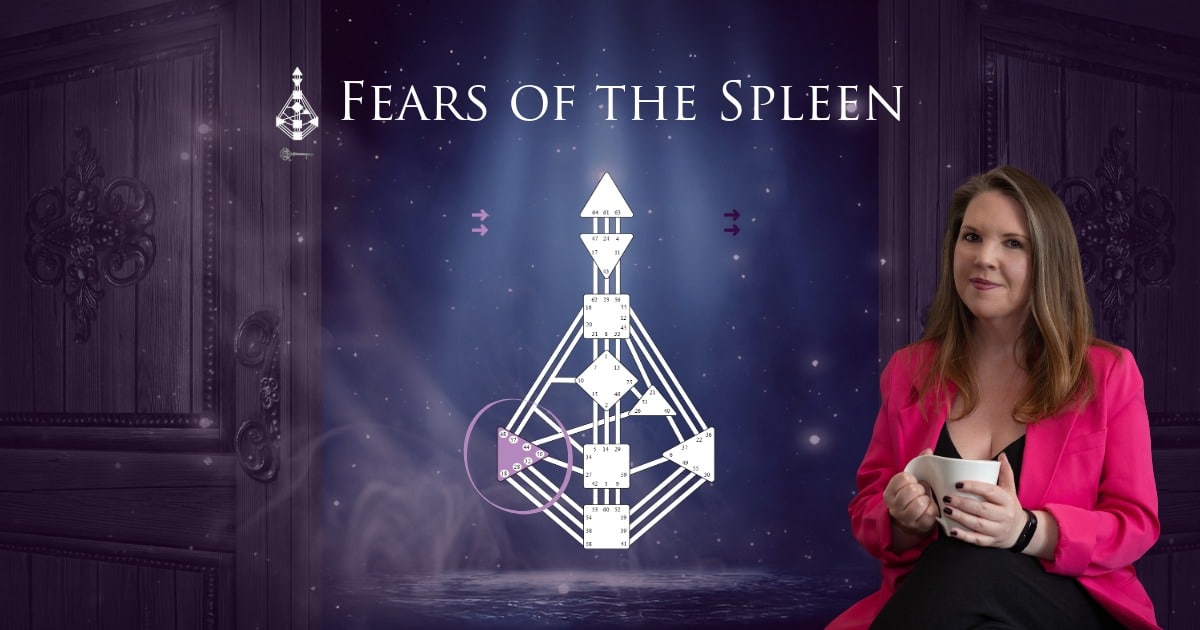
Fears of The Spleen in Human Design

The Spleen Centre is the oldest awareness centre in the Human Design system. It governs intuition, survival instinct, health, and immune system function. In ancient terms, this awareness kept us safe from immediate dangers – like predators, poison, or unsafe environments.

But in modern life, most of us aren’t dealing with wild animals or life-or-death dangers daily. Instead, this survival mechanism still fires – only now it latches onto things like phone alarms, deadlines, social interactions, or the ping of an email. These primal responses often show up as persistent background anxieties, because our body doesn’t know the difference between an actual threat and a perceived one.

Understanding the Spleen is key because it shows us how our system is constantly scanning for danger. If we’re unaware of it, we can live in fear-based patterns. But when we bring awareness, we can transform those fears into gifts of instinct, intuition, and wisdom.

Fears of the Spleen – by Gate

Here’s a gate-by-gate breakdown of the shadow fears (when unaware) and the gift/potential (when aligned), drawing on Human Design and Gene Keys language.

Gate 48 – Depth

  • Fear (Shadow): Fear of inadequacy – never knowing or being enough, feeling unprepared.
  • Gift: Wisdom and resourcefulness. The ability to access depth when needed.

Gate 57 – Intuition

  • Fear (Shadow): Fear of the future – a constant unease about what’s coming next.
  • Gift: Clear intuition. Deep instinctual knowing in the present moment.

Gate 44 – Alertness

  • Fear (Shadow): Fear of the past repeating itself – repeating mistakes, betrayal, or failure.
  • Gift: Pattern recognition and memory. The gift of spotting what will work (and what won’t).

Gate 50 – Values

  • Fear (Shadow): Fear of responsibility – being crushed under obligations or getting it wrong.
  • Gift: Integrity and nurturing. The wisdom to hold and protect what truly matters.

Gate 32 – Continuity

  • Fear (Shadow): Fear of failure – that things won’t endure, succeed, or have value.
  • Gift: Instinct for transformation. Knowing what can last and thrive over time.

Gate 28 – Struggle

  • Fear (Shadow): Fear of death – or more deeply, that life has no purpose.
  • Gift: Courage and purpose. The ability to embrace challenge as meaningful.

Gate 18 – Correction

  • Fear (Shadow): Fear of authority or of being judged as wrong.
  • Gift: Integrity and improvement. The ability to refine and perfect systems for the good of all.

Reframing Fear into Gift

When unconscious, these gates keep us locked in cycles of anxiety – endlessly scanning for what might go wrong. But their true purpose is not to cripple us with fear; it’s to guide us toward wisdom and refinement.

  • Fear of inadequacy (48) becomes a gift of depth and resource.
  • Fear of the future (57) becomes a reliable intuitive compass.
  • Fear of the past (44) becomes discernment and pattern recognition.
  • Fear of responsibility (50) becomes protective and ethical care.
  • Fear of failure (32) becomes an instinct for what will endure.
  • Fear of death/meaninglessness (28) becomes courage and life purpose.
  • Fear of authority/judgement (18) becomes the gift of refinement and integrity.

By noticing which of these gates are active in your design, you can begin to understand which anxieties might be heightened in your life. They aren’t wrong – they’re signals. They’re your system trying to keep you safe, but often the threats are no longer real. With awareness, you can shift these from sources of fear into powerful guides for living with clarity and instinctive wisdom

The Success Codex: The Alchemist (Gate 47) Genius Perspective

The Alchemist: How Perspective Transforms Challenges into Insight and Growth

The Alchemist embodies the ability to transmute limitation into wisdom through perspective. This archetype sees life’s challenges not as dead ends, but as raw material for transformation. By choosing perspectives that shift the meaning of experiences, the Alchemist unlocks new levels of self-understanding and catalyses growth.

Where others may feel trapped in confusion or weighed down by mental pressure, the Alchemist works with these states, refining them until clarity and insight emerge. This archetype reminds us that transformation is not about erasing the past, but about re-seeing it through a lens that empowers.

Personality Traits of The Alchemist

  • Reflective and contemplative, often drawing meaning from lived experiences
  • Sees patterns in challenges and knows how to turn them into opportunities
  • Patient with the process of clarity — doesn’t rush transformation
  • Grounded in wisdom, yet imaginative in interpretation
  • Able to hold space for discomfort and uncertainty while awaiting insight
  • Naturally catalytic — their perspective inspires growth in others

Values of The Alchemist

  • Transformation – believes that every limitation carries the seed of potential
  • Perspective – honours the power of reframing to create new possibilities
  • Patience – values waiting for insight to ripen instead of forcing answers
  • Integrity – seeks truth in experience rather than glossing over discomfort
  • Service – uses their clarity to support others in navigating confusion
  • Resilience – trusts that even the heaviest burdens can be transmuted

Summary

The Alchemist lives in the liminal space between confusion and clarity. Through patience, perspective, and trust in transformation, they remind us that every limitation contains hidden wisdom. Their genius lies in choosing perspectives that liberate not just themselves, but those they influence, turning what once felt heavy into a source of empowerment and growth.

Gate 47 – The Gate of Realisation

Human Design Perspective

Gate 47 sits in the Ajna Centre (the centre of mental awareness) and pairs with Gate 64 in the Head Centre to form the Channel of Abstraction. This is the pressure-to-processing circuit: where the raw, often confusing imagery of Gate 64 finds structure, interpretation, and eventually, realisation in Gate 47.

The essence of Gate 47 is about finding meaning. Those with this gate defined are designed to work with abstract experiences and shape them into coherent insights. But there’s tension here – the Ajna brings pressure to “figure it out,” which can lead to frustration, mental strain, or feeling like the answer never fully arrives. The gift is patience, perspective, and trusting that insight emerges in its own time.

Gene Keys Perspective

Richard Rudd describes Gene Key 47 as the path from Oppression (Shadow)Transmutation (Gift)Transfiguration (Siddhi).

  • Oppression (Shadow): The weight of confusion, guilt, or mental struggle. Experiences feel heavy and overwhelming.
  • Transmutation (Gift): By shifting perspective, you transform struggle into wisdom, discovering meaning in what once felt oppressive.
  • Transfiguration (Siddhi): At its highest state, all suffering is seen as divine, and every experience becomes a doorway to awakening.

The journey of Gene Key 47 is an alchemical one – turning the “lead” of human struggle into the “gold” of insight and wisdom.

Success Codex Perspective

  • Genius: Perspective
  • Archetype: The Alchemist
  • Aligned: Flexible
  • Out of alignment: Fixed
  • Key to Success: Turning challenges into fuel for transformation through the power of your perspective.

When aligned, Gate 47 allows you to hold struggle with grace and alchemise it into wisdom – your perspective becomes a powerful tool for transformation. When out of alignment, this same energy feels heavy, stuck, or overwhelming, as though life is happening to you rather than for you.

✨ The invitation of Gate 47 is to reframe challenges not as burdens, but as raw material for growth and meaning. You are able to shift perspective into one that finds the spark of wisdom. 

Reflection Prompts

  • Where am I currently feeling mental or emotional “weight” in my life?
  • How might a shift in perspective reveal hidden wisdom in these struggles?
  • What experiences from my past have already transformed into insights I now share with others?

Action Prompts

  • Pause when under pressure – give confusion and struggle space to breathe before forcing an answer.
  • Reframe challenges by journaling: “What might this experience be teaching me?”
  • Share your wisdom – consider how your past struggles can support or illuminate others’ journeys.

Everyday Life Expression

Gate 47 often shows up in daily life as the search for meaning. You might find yourself replaying past experiences, trying to “figure them out,” or feeling the weight of unanswered questions. In alignment, this same process becomes a gift: you draw connections, see patterns, and extract wisdom that can help yourself and others.

  • In alignment: You transmute struggle into insight, offering a perspective that uplifts and illuminates.
  • Out of alignment: You feel stuck in loops of guilt, oppression, or mental heaviness, unable to see the bigger picture.

The Success Codex: Archetype The Illuminator – Genius: Clarity

The Illuminator Archetype

The Illuminator archetype embodies the journey from confusion to clarity, holding space for uncertainty while trusting that insight and understanding will emerge in the right time. They bring light to the unknown and help others see patterns and meaning within complexity.

Personality Traits:

  • Perceptive: The Illuminator has a natural ability to notice subtle patterns and hidden connections, even when others may only see disorder. They sense that within confusion lies the seed of revelation.
  • Patient: Instead of rushing to resolve uncertainty, the Illuminator allows the process of clarity to unfold. They trust in timing, understanding that wisdom often emerges gradually.
  • Reflective: They have a contemplative nature that seeks depth and meaning. Through reflection, they distil confusion into insights that can guide themselves and others.
  • Visionary: The Illuminator holds a broader perspective, capable of seeing beyond immediate chaos to a bigger picture that inspires hope and direction.

Values:

  • Truth: The Illuminator is deeply committed to uncovering what is real and authentic, even if it requires moving through discomfort or uncertainty first.
  • Integrity of Insight: They value clarity that is genuine and hard-earned, not superficial quick fixes. Their revelations feel trustworthy because they arise from lived experience and reflection.
  • Guidance: With their ability to transform confusion into wisdom, the Illuminator values sharing their insights to light the path for others. They believe understanding should ripple outward and support collective growth.
  • Depth: They honour complexity and resist oversimplification, knowing that true clarity is not about reducing but about integrating.

The Illuminator archetype is characterised by patience, perception, and the ability to bring light into moments of uncertainty. They transform the weight of confusion into wisdom, serving as guides who reveal clarity and perspective for themselves and those around them.

Reflections

  • Where in my life do I feel confusion or mental pressure right now?

  • Am I trying to force clarity, or am I allowing insights to arrive in their own time?

  • How can I soften into the “not knowing” instead of rushing for an answer?

  • When have I noticed that true clarity came only after sitting with uncertainty?

Action Prompts

  • Pause when you notice yourself spiralling in mental pressure. Take a breath and remind yourself: clarity comes after confusion.

  • Keep a journal nearby to capture flashes of insight when they arise, rather than trying to “think your way” there.

  • Practise trusting that illumination is a process – clarity emerges naturally when the time is right.

  • This week, experiment with letting go of needing to figure everything out. Notice what shifts when you create space for insight.

Gate 64: Gate of Confusion in Human Design – leading you to clarity

Gate 64 – The Gate of Confusion

Gate 64 is located in the Head Centre, one of the pressure centres in Human Design. Gate 64 pairs with Gate 47 in the Ajna Centre, forming a channel of Abstract Realisation.

Where Gate 47 attempts to find clarity, Gate 64 holds the raw, unstructured imagery and impressions of past experiences. It’s not about immediate answers, but about learning to sit with confusion until insight emerges.

Gene Keys Perspective

In the Gene Keys, Gate 64 is described as the journey from Confusion (Shadow) → Imagination (Gift) → Illumination (Siddhi).

  • In the shadow of confusion, the mind scrambles for answers, creating anxiety or overwhelm.
  • At the level of the gift of imagination, confusion is re-framed as fertile ground for creative possibilities, visions, and inspiration.
  • At the siddhi of illumination, confusion dissolves altogether, leaving only the pure light of knowing.

The key is to trust that confusion is a natural stage of processing – it is not a mistake, but a doorway.

Success Codex Lens

Through the Success Codex lens, Gate 64 speaks to your capacity to hold uncertainty while allowing inspiration to arrive in its own timing and offers the Genius of Clarity by being The Illuminator.

  • When aligned, you bring clarity to complex situations by illuminating unseen truths.
  • Out of alignment, you may fall into a chronic state of confusion and ‘you don’t know.’

Gate 64 is an invitation to trust the pause and give yourself space to let meaning unfold.

Reflection Prompts

  • How do I currently respond when I feel confused?
  • Do I allow myself to sit in the not-knowing, or do I push for answers?
  • What creative insights have emerged for me when I’ve allowed time and space for confusion to settle?

Action Prompts

  • Practise sitting with confusion rather than solving it straight away – notice what arises.
  • Journal or sketch when you feel confused to channel the imagery and impressions rather than suppressing them.
  • Trust your inner timing – clarity will arrive when it’s ready.

Everyday Life Expression

  • Feeling mentally foggy before a new project or transition, then later piecing the threads together.
  • Having lots of abstract images, dreams, or memories swirling without making sense at first.
  • Feeling pressure to find answers, but learning to give yourself permission to wait.
  • Moments where sudden insight or clarity appears – the confusion was simply the preparation.

Summary of Gate 64 – The Gate of Confusion

  • In Alignment: You allow confusion to be a natural part of the process. You embrace imagination, trust in timing, and use confusion as a seedbed for inspiration and insight.
  • Out of Alignment: You feel overwhelmed, rush to force answers, overthink, or doubt yourself. The pressure of confusion becomes paralysing rather than creative.

Do you have this gate in your chart? If so do you know what planet activates it? For me it is Mercury on my unconscious side – so these themes are influencing my communication, but I may not be aware of it. ????

Gate 40 – The Gate of Aloneness

Gate 40 – The Gate of Aloneness

Human Design Perspective

Gate 40 sits in the Heart (Ego/Will) Centre and forms part of the Channel of Community (37–40).
This is the energy of work and resolve, the willpower to provide, to serve, and to support.

Gate 40 also carries a deep need for aloneness and rest. Those with this gate defined are designed to contribute to their communities, but only when they honour their natural cycles of withdrawal and replenishment. Without rest, willpower depletes, and service becomes unsustainable.

Gene Key Perspective

Richard Rudd frames Gene Key 40 as the journey from:

Exhaustion → Resolve → Divine Will

  • Shadow (Exhaustion): This energy burns out, overworks, and sacrifices too much, leaving nothing for the self.
  • Gift (Resolve): A balanced use of willpower that serves from strength rather than depletion.
  • Siddhi (Divine Will): Pure service, willpower surrendered into higher flow, becoming a channel for Divine Will without struggle.

This key teaches that true commitment doesn’t mean relentless giving, but honouring the cycles that sustain long-term service.

Success Codex Perspective

  • Genius: Resolve
  • Archetype: The Will
  • Aligned: Unwavering
  • Out of alignment: Forcing
  • Key to success: Use your resolve to be of service while honouring your energy.
  • Guiding question: How can I use my willpower to resolve this?

When aligned, Gate 40 embodies dependable commitment – the kind of steady willpower that others can trust. It improves lives, supports communities, and sustains lasting impact.

When unaligned, the energy slips into forcing – pushing willpower past natural limits, leading to exhaustion, resentment, and collapse.

The lesson of Gate 40 is that true resolve requires balance: honouring your own energy while offering your will in service of others.

Reflections

  • Where am I giving my energy in ways that deplete me?
  • What commitments feel steady and sustainable – and which feel forced?
  • How do I balance my need for solitude with my desire to serve?
  • Is Your Will centre Defined or Undefined? How does this influence this gate’s energy?
  • How does this energy combine with your type? Especially Projectors, Reflectors and Manifestors. 

Action Prompts

  • Notice this week where your willpower is being tested. Pause and ask: Am I acting from resolve or forcing through exhaustion?
  • Schedule intentional time for rest or solitude – recognise it as an integral part of your service, not a distraction from it.
  • Practise saying no when commitments feel unsustainable, so that your yes carries true power.

How the Edit framework helps you unlock the power of your Human Design. Explore. Develop. Implement. Trust

Human Design is one of those tools that can feel overwhelming when you first encounter it. Charts, numbers, gates, centres… it’s a lot. And while there’s a depth of wisdom in it, the real challenge is this:

How do you actually use Human Design in your everyday life and business?

That’s where my EDIT framework comes in. It’s a simple structure to help you unlock the power of your design without getting lost in the theory.

EDIT stands for: Explore. Develop. Implement. Trust.

Explore: Your Energetic Blueprint

The starting point is always awareness.

  • What does your chart reveal about your energy type, authority, and definition?
  • Where are you naturally strong, and where do you take in and amplify others?

This stage is about curiosity, not judgement. By exploring your design, you start to see why you operate the way you do, and why forcing yourself to fit into someone else’s strategy often leaves you drained.

Why it matters: When you understand your energy blueprint, you stop wasting time on approaches that don’t work for you.

Develop: Self-Trust and Clarity

Once you’ve explored, the next step is developing confidence in your design. That means learning to trust your inner guidance instead of outsourcing every decision.

It’s not about collecting more information. It’s about recognising:

  • What clarity feels like in your body.
  • What your emotional or intuitive authority is really telling you.
  • How to decondition the patterns that keep pulling you off-track.

Why it matters: When you develop self-trust, you stop second-guessing and start moving with clarity.

Implement: Aligned Strategy and Structure

Here’s where the path diverges slightly, because Human Design applies to both life and business.In business: Implementation might look like refining your messaging, planning offers that feel natural, or creating systems that work with your energy (not against it).

In life: It might look like creating routines that feel supportive, strengthening relationships, improving communication, understanding family dynamics, or learning to work with your emotional energy.

Why it matters: Implementation is where things shift from “knowing” to actually living your design.

Trust: Intentional Action

The final step is trust. Not blind trust, but the kind that comes from repeatedly testing your design and seeing it work in practice.

Trust is about:

  • Giving yourself permission to pause instead of pushing.
  • Taking intentional action instead of reactive action.
  • Staying grounded when the noise of the world tells you to do things differently.

Why it matters: Trust creates momentum. The more you act from alignment, the more you see results that feel right for you.

Bringing It All Together

The EDIT framework is not a one-time process. It’s a cycle. Every time you explore something new in your chart, you deepen your development, refine your implementation, and expand your trust.

That’s how Human Design stops being just another piece of information and becomes a practical guide you can actually live by.

Explore. Develop. Implement. Trust.
That’s how you unlock the real power of your Human Design.

Want to put this into practice?

That’s exactly what we do inside The Momentum Edit, my mentorship space designed to help you integrate Human Design into your everyday life and business.

It’s not about theory or information overload. It’s about having a place to bring your questions, test strategies, and keep moving forward, with intuition, strategy, and design all working together.

If this sounds like the support you need right now, I’d love for you to join us inside The Momentum Edit.

How Pluto is Changing My Life Right Now (channel 3-60 in Human Design)

Thanks to Pluto’s latest transit I’ve experienced a noticeable shift in my energy. Tasks that once felt daunting like revamping my website are now flowing with surprising ease. This change coincides with Pluto’s transit through Gate 60, completing the 3–60 Format Channel in my chart. This alignment has resulted in me doing happy dances around my office! And it is here for the next 100 days.

Understanding the 3–60 Channel

The 3–60 Channel, known as the Channel of Mutation, connects Gate 3 (Difficulty at the Beginning) in the Sacral Center to Gate 60 (Limitation) in the Root Center. This channel represents the process of transforming chaos into order, initiating change, and navigating the tension between innovation and limitation.

  • Gate 3: Positioned in the Sacral Center, Gate 3 embodies the energy of initiating new processes and ideas. It’s about bringing order to chaos, but this often begins with confusion and uncertainty. Individuals with Gate 3 defined may experience a pressure to innovate, yet without the complementary Gate 60, this energy can feel aimless or ungrounded.
  • Gate 60: Located in the Root Center, Gate 60 deals with the pressure to accept limitations and bring structure to what might initially seem chaotic. It’s about recognising boundaries and finding creative ways to work within them. When Gate 60 is activated, it provides the grounding and structure that Gate 3 requires to channel its innovative energy effectively.

When both gates are defined, as in the complete 3–60 Channel, there’s a harmonious flow between initiating new ideas and grounding them into reality. This alignment allows for a more seamless transition from concept to execution, reducing the friction often felt when starting new projects.

The Pressure of a Hanging Gate 3

With only Gate 3 defined in my chart, I experience the energy of initiation without the grounding influence of Gate 60. This can create a subtle yet persistent pressure of a drive to start new things without a clear sense of direction or structure. It’s like having a powerful engine without a steering wheel: there’s energy and momentum, but no clear path forward.

This tension manifests as:

  • Uncertainty: A feeling of not knowing where to begin or how to proceed.
  • Frustration: The desire to initiate without the means to bring ideas to fruition.
  • Restlessness: A constant urge to change things without a clear understanding of how or why.

These feelings can lead to procrastination or a cycle of starting and abandoning projects, as the energy lacks the necessary structure to materialise.

The Influence of Pluto’s Transit

Pluto’s current transit through Gate 60 has temporarily completed my 3–60 Channel, providing the missing piece to my energy puzzle. This activation has brought several noticeable shifts:

  • Increased Clarity: Tasks that once felt overwhelming now have a clear direction.
  • Enhanced Focus: The ability to concentrate on projects without the usual distractions.
  • Improved Productivity: A smoother transition from planning to execution, with a natural flow of energy.

This alignment has allowed me to tackle long-standing projects, like updating my website, without the usual confusion.

So what does all of this mean

For now, I am leaning in… I have 100 days to get things done! It doesn’t mean I can’t get things done when gate 60 isn’t activated, but it certainly is alot easier.

But what this information does give me is also an understanding of why sometimes things do feel hard. And not to give myself a hard time about it.

There are 3 sets of format channels… 9/52 – 3/60 and 42/53 all with their own ways of playing out. If you have any of those as hanging gates then I highly recommend looking into that that means for you.

I do have the full channel 9/52 in my chart, and coincidentally or not the large majority of my clients have one of those gates as a hanging gate, or don’t have it at all. Energetically I help them bridge that gap.

If you want to know more about anything I have mentioned in this blog or are interested in how the transits might be impacting your chart get in touch.

Katy

Gate 37 – The Gate of Connection

Human Design Perspective Gate 37 sits in the Solar Plexus centre, the centre of emotional awareness and wave-based consciousness. It pairs with Gate 40 in the Ego/Heart centre to form

Read More »

Gate 55 – The Gate of Freedom

Human Design Perspective Gate 55 sits in the Solar Plexus centre, the centre of emotional awareness and wave-based consciousness. It pairs with Gate 39 in the Root to form the

Read More »

Gate 49 – The Gate of Revolution

Human Design Perspective Gate 49 sits in the Solar Plexus centre, the centre of emotional awareness, sensitivity, and wave-based decision-making. It pairs with Gate 19 in the Root to form

Read More »

Unlocking Your Genius with The Success Codex

The Success Codex is a powerful system designed to help you move forward in your business, and beyond. While it has a business lens, once you start to work with it, it can support you in multiple areas of your life. In essence, it maps out 13 gateways, each revealing a route to unlock your natural strengths and potential.

The Success Codex blends Human Design, Gene Keys, and astrology. Even if you’re new to these systems, it provides a simplified, accessible framework so you can focus on what matters most for your growth.

What the Success Codex Does

  • Strips away the complicated parts of Human Design, Gene Keys, and astrology to focus on actionable insights.
  • Shows you your natural strengths, leadership potential, and communication style.
  • Helps you understand both outward business strategies and inward personal growth.
  • Gives you a roadmap of 13 gateways, grouped into four paths:
    • Impact – your visibility and ability to make a mark
    • Growth – attracting abundance and opportunities
    • Balance – sustainability and maintaining stability
    • Transformation – navigating change and evolving with confidence

The Four Paths Explained

1. Impact

Focuses on outward visibility and your ability to step into leadership. This path helps you attract attention and recognition in ways that align with who you are.

2. Growth

This path is about building your brand and creating abundance. It helps you understand how to expand your business and attract aligned opportunities.

3. Balance

Focuses on sustainability and internal stability. It provides guidance for navigating the ups and downs of business life, supporting long-term resilience.

4. Transformation

Centers on change and evolution. It shows you how to initiate new projects, embrace necessary shifts, and step into new levels of capability with confidence.

How It Works

Each gateway has:

  • A key code (derived from your Human Design and Gene Keys)
  • An approach based on your line number, which personalises how you work with your genius
  • Archetypes that embody your strengths
  • In-alignment and out-of-alignment cues, so you can see where you thrive and where you may struggle
  • Guiding questions to bring you back into focus when you feel scattered

This personalised map helps you take aligned action, make confident decisions, and understand your natural rhythm in business.

Why It’s Valuable

Even if your Human Design or astrology knowledge is limited, the Success Codex:

  • Makes complex systems actionable
  • Provides clarity for decision-making
  • Reveals where you can activate success and where you might block it
  • Helps you align your daily actions with your unique energy and strengths

By working through your gateways one path at a time, you gradually uncover how to lead, grow, sustain, and transform all in alignment with your personal genius.

Next Steps

Curious to see how the Success Codex can guide you? Whether you’re seeking clarity, more visibility, sustainable growth, or confident transformation, the Success Codex gives you a personalised roadmap.

“The Success Codex gives you permission to trust the genius you already carry.”

Gate 29 in Human Design and Gene Keys: How to Commit Fully Without Burning Out

Human Design

As I write this the Sun is in Gate 29, the Gate of Commitment, found in the Sacral Centre. This energy is all about perseverance and saying a wholehearted “yes” to what truly matters. But the shadow side comes when we commit to things that don’t align with our energy, leading to burnout, frustration, or half-heartedness.

Gene Keys

  • Shadow: Half-heartedness
  • Gift: Commitment
  • Siddhi: Devotion

The Gene Keys remind us that the real power of commitment is not about saying yes to everything, but about finding the sacred devotion within what we choose. When we give ourselves fully, we transform even the most ordinary experiences into pathways of devotion.

The Success Codex

  • Genius: Commitment
  • Archetype: The Devotee
  • Alignment cue: Committed
  • Out of alignment: Half-hearted
  • Guiding mantra: My key to success is devoting myself and my energy to what is meaningful to me.
  • Guiding question: What can I commit to here?

This reminds us that the secret to success is not spreading ourselves thin, but dedicating energy where it counts. The Devotee archetype reminds us that when we choose with clarity and honour our yeses, we create momentum and magnetism.

Ways to work with Gate 29.

Reflections

  • Where in your life are you over-committed or half-hearted?
  • What could shift if you brought full devotion to just one meaningful commitment?
  • What needs to be released to create space for a wholehearted “yes”?

Action Prompts

  • Pause before saying yes. Ask: Is this a full-body yes?
  • Choose one area where you can bring deeper consistency and commitment.
  • Notice the difference in energy when you are devoted versus when you’re just “going through the motions.”

The Projection Field of the 5th Line in Human Design

It is not a line 5’s responsibility to solve all our problems! Even though we may think it is…

Line 5 – The Projected Problem-Solver

People with a 5th line in their Human Design profile often carry a natural aura of practicality and solutions – they are here to share their solutions with the world. Which, can lead others to project their expectations onto them. They see them as someone who can “fix things” or come up with practical solutions.

In everyday life, this can look like:

  • Friends, family, or colleagues coming to them with problems, expecting answers or guidance.
  • Being admired for their ability to see solutions, even before they offer them.
  • Sometimes feeling pulled in different directions because everyone’s projections demand attention.

HOWEVER:  The 5th line is not here to solve everyone’s problems indiscriminately. It’s about recognising which projections to engage with, those where they can make a real, aligned impact for the collective. Their problem solving is universal.

Why this is Important:  

Because others project their expectations onto a Line 5, there’s a tendency for people to blame them when things don’t turn out as expected. The 5th line can offer guidance and solutions, but they cannot control how others use or respond to it.

The key is recognising where the projections are coming from, engaging only when it feels aligned, and letting go of attachment to the outcome. Their gift is clarity and practical insight, not carrying the weight of everyone else’s results.

Responding and trying to help when not aligned can result in the line 5 becoming the ‘villian of the piece’ completely unfairly.

A 5th Line Perspective…

“People often see me as the one with the answers. Others project their challenges onto me, expecting solutions. My skill is knowing which ones to take on so I can truly help, without losing myself in what isn’t mine.”

Tips for Protecting Boundaries as a Line 5

  1. Recognise projections early
    • Pause when someone comes to you with a problem and ask yourself: “Is this really my responsibility, or is it their projection?”
  2. Set clear intentions before helping
    • Decide consciously whether you want to engage. It’s okay to say, “I can offer advice on this, but I can’t take it on completely, I am not responsible for the outcome”
  3. Limit over-commitment
    • 5th lines can burn out by taking on too many expectations. Consider setting time limits or selective availability.
  4. Use your aura to guide responses
    • Trust your natural clarity, your energy will attract the right situations and people who respect your boundaries.
  5. Communicate openly
    • Let people know you are happy to help, but not at the expense of your own energy.
    • Example: “I’m happy to share ideas, but I can’t be responsible for fixing this entirely.”
  6. Protect your mental and emotional space
    • Daily practices like journaling, reflection, or quiet time help prevent absorbing others’ projections. Detatch from people or places where you feel your boundaries are not being respected.

Do you have a 5 in your profile… does this resonate?

Or maybe you have someone in your life who is a line 5 – do you recognise this pattern either with your own behaviour or that of others?

Gate 4 – The Need to Understand

“What do I truly understand about this?”

We are currently in the energy of Gate 4 – Meaning collectively we can ask ourselves the question “What do I truly understand about this?”

This week, the transit of Gate 4 brings us into the realm of logic, understanding, and problem-solving, but with a twist. It’s not just about thinking harder or faster. The wisdom of Gate 4 is in combining multiple perspectives to see the bigger picture.

In Human Design

Gate 4 sits in the Ajna Centre, the hub of mental awareness, and is known as The Gate of Formulisation. It takes ideas and tries to form logical answers. This is the energy of figuring things out, but not necessarily instantly or perfectly.

If you have it defined, you may have a consistent way of processing ideas and arriving at answers. If it’s undefined, you might find you “borrow” this energy from others or feel its influence more strongly during transits like this week.

In the Gene Keys

Gate 4 becomes Gene Key 4:
The Shadow of Intolerance → The Gift of Understanding → The Siddhi of Forgiveness

  • Shadow – Intolerance shows up when we cling too tightly to one way of thinking or dismiss perspectives that don’t match our own. It can also look like rushing to provide an answer before sitting with the complexity.
  • Gift – Understanding emerges when we integrate logic with empathy, facts with heart. This is the true problem-solving gift of Gate 4.
  • Siddhi – Forgiveness is the deepest expression of this gate — the moment we release judgement entirely and hold space for every perspective.

In the Success Codex – The Conceptualiser

  • Archetype: The one who taps multiple sources to create well-rounded understanding.
  • Aligned Cue: Comprehensive – integrating multiple intelligences to understand and solve problems.
  • Unaligned Cue: Biased – misusing logic, relying only on the mind, or shutting out perspectives that challenge you.
  • Key to Success: Using multiple perspectives to understand concepts and formulate answers.
  • Guiding Question: What are all sides of this showing me?

How to Work With Gate 4 This Week

If you have Gate 4 defined:
You naturally arrive at solutions by exploring multiple perspectives, and that’s your genius. This week, give yourself full permission to stay on the fence as long as you need to. Let yourself tap into different sources, viewpoints, and angles before settling on an answer. Your strength isn’t in rushing to a conclusion, it’s in creating an understanding so well-rounded that, when you do share it, it’s both deeply considered and genuinely useful.

If you have Gate 4 undefined:
Pay attention to who you’re around and what “answers” you’re absorbing. Are they truly yours, or are you taking on someone else’s way of thinking? The transit may temporarily give you sharper logical processing, use it for reflection, not rushing.

For all of us during the transit:
This is a week for curiosity over certainty. Let your understanding deepen by slowing down. Don’t just ask, “What’s the answer?” ask, “What do I not yet see?”

Reflection & Action Prompts

  • What’s a current problem in my business or life? How many different perspectives can I explore on it?
  • Am I rushing to “fix” something, or am I allowing understanding to emerge?
  • What would my heart say about this situation, not just my mind?
  • Where am I being too rigid in my thinking?

Subscribe To Our Newsletter

get the latest tips and advice straight to your inbox

Please fill out the form below and we'll be in touch shortly to speak with you